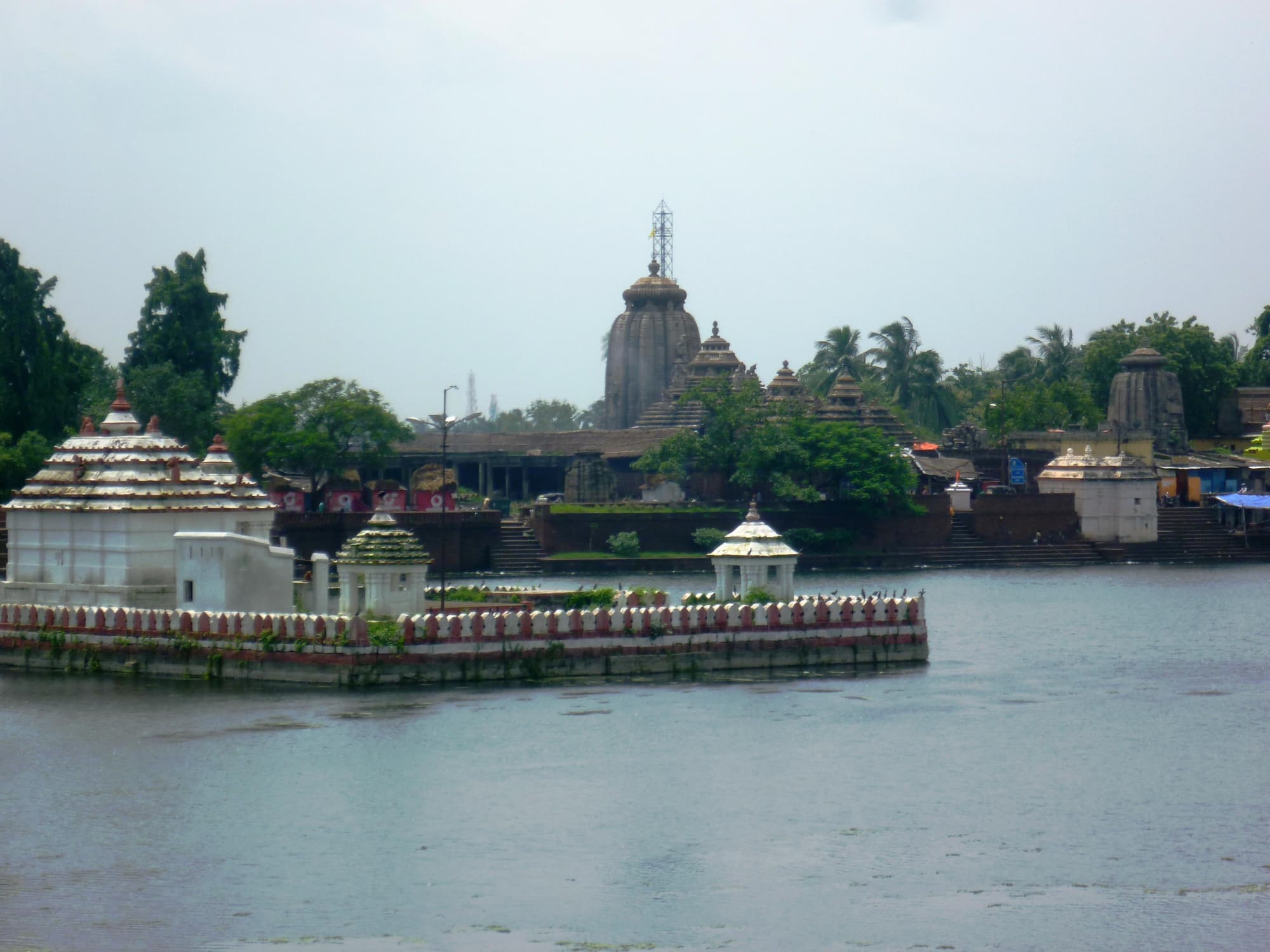
Bhubaneswar is the capital of Odisha and one of the oldest continuously sacred cities in India. It is also a modern, green and easy-going state capital with good hotels, cheap transport and excellent food. This guide covers how long to stay, what to see, what it costs and how to behave in the temples.
How long do you need?
- One day — the Old Town temples in the morning, the Udayagiri caves in the afternoon, or a private Konark and Bhubaneswar day trip.
- Two days — the city properly: temples, museum, caves and Dhauli.
- Three to four days — the version we recommend: add Konark and a night in Puri.
- Five days or more — add Raghurajpur, Chilika Lake and a slower pace.
Temple etiquette
Bhubaneswar’s temples are living places of worship. Remove shoes where asked (there are shoe stands at every major temple), dress modestly with shoulders and knees covered, and do not photograph inside sanctums. Leather items are not welcome in some temples.
What to see
 Old Town temples
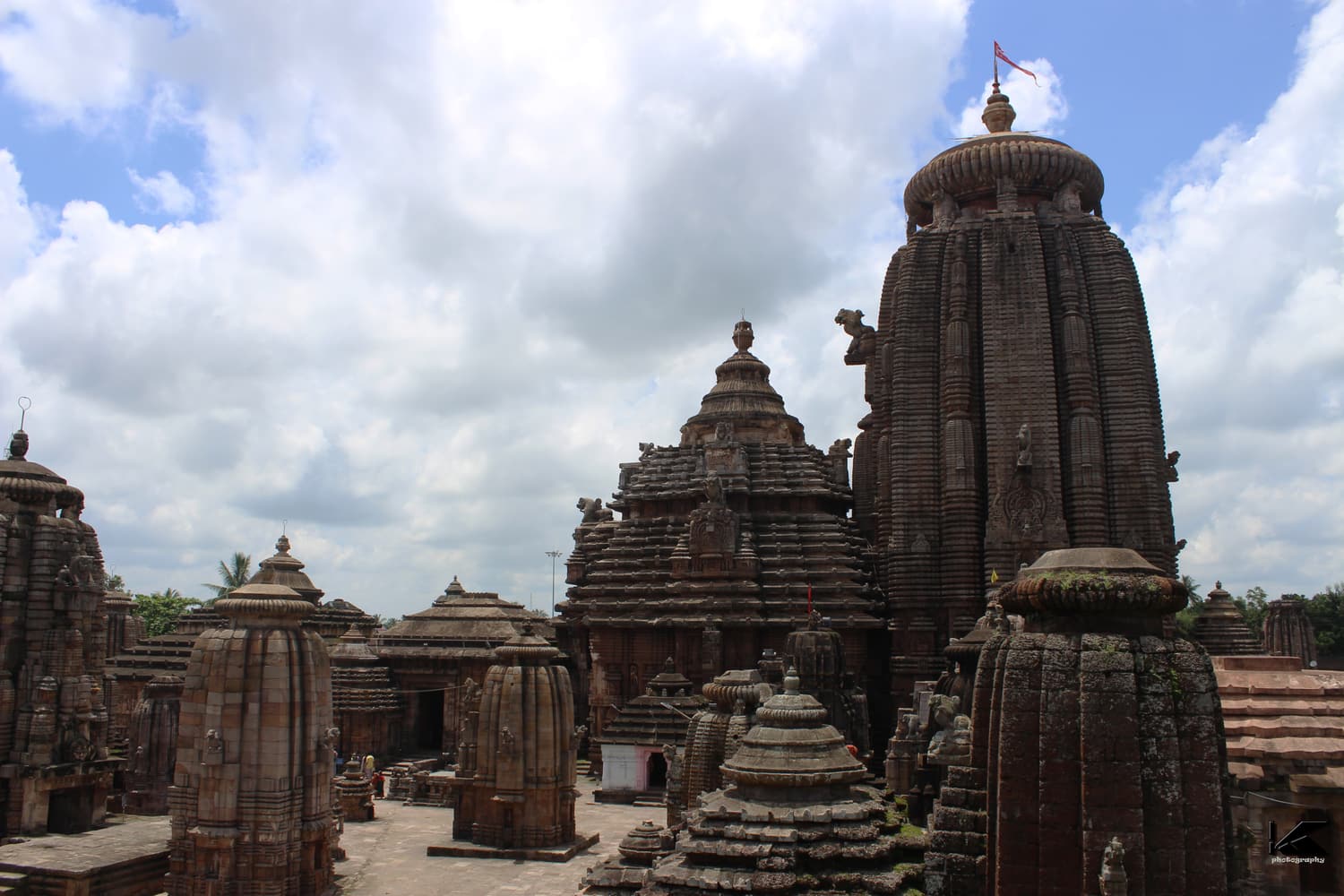
Lingaraj Temple
The great tower of the Temple City
Bhubaneswar’s largest and holiest temple, an 11th-century masterpiece whose 55-metre tower dominates the Old Town. Hindus may enter the walled compound of more than a hundred shrines; everyone else sees it from a viewing platform beside the wall.
 Old Town temples
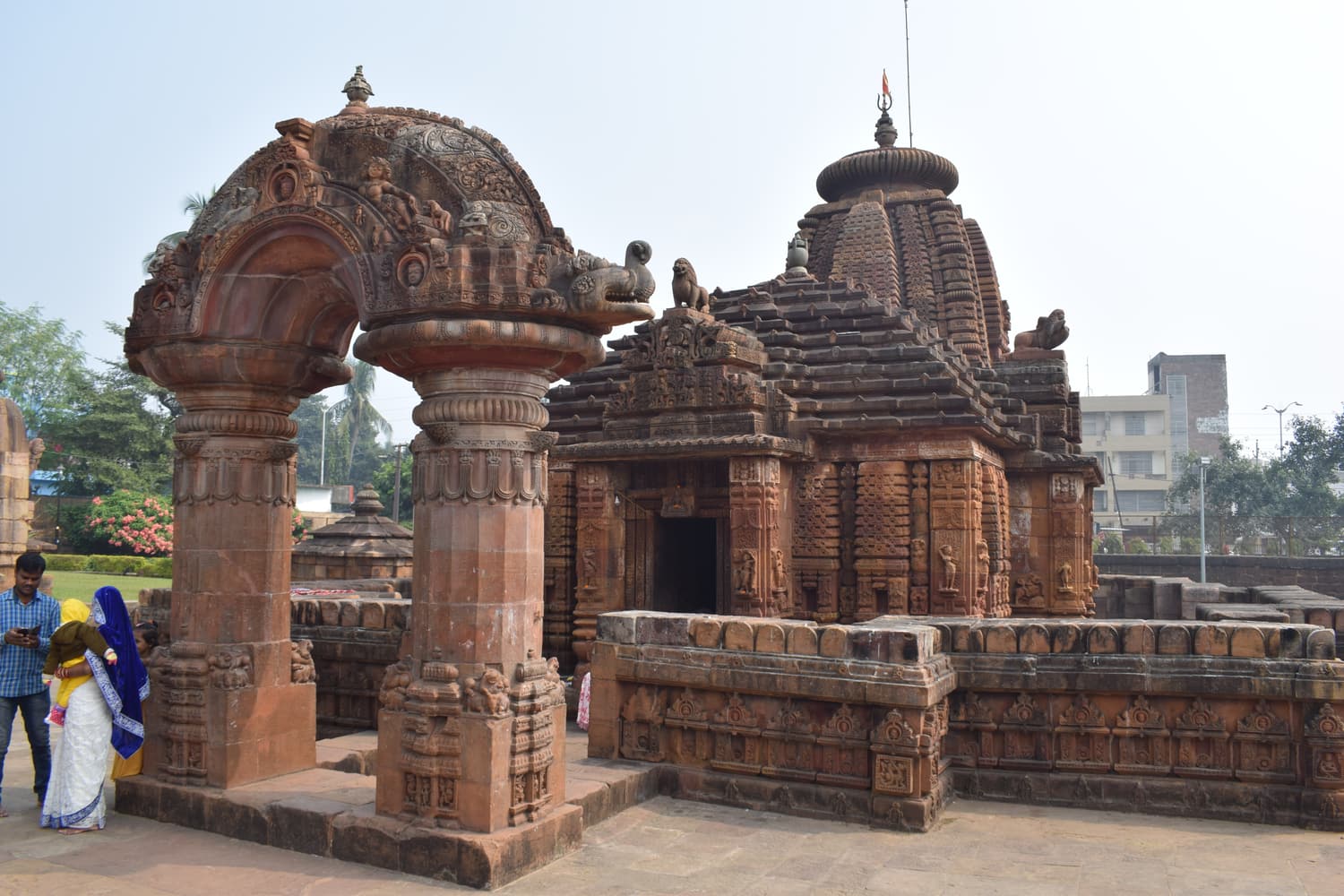
Mukteswar Temple
The gem of Odishan architecture
A small 10th-century temple famous for its carved sandstone torana arch and the most delicate sculpture in the city. Open to everyone, set in a garden with the Siddheswar temple and a sacred tank beside it.
 Around Bhubaneswar
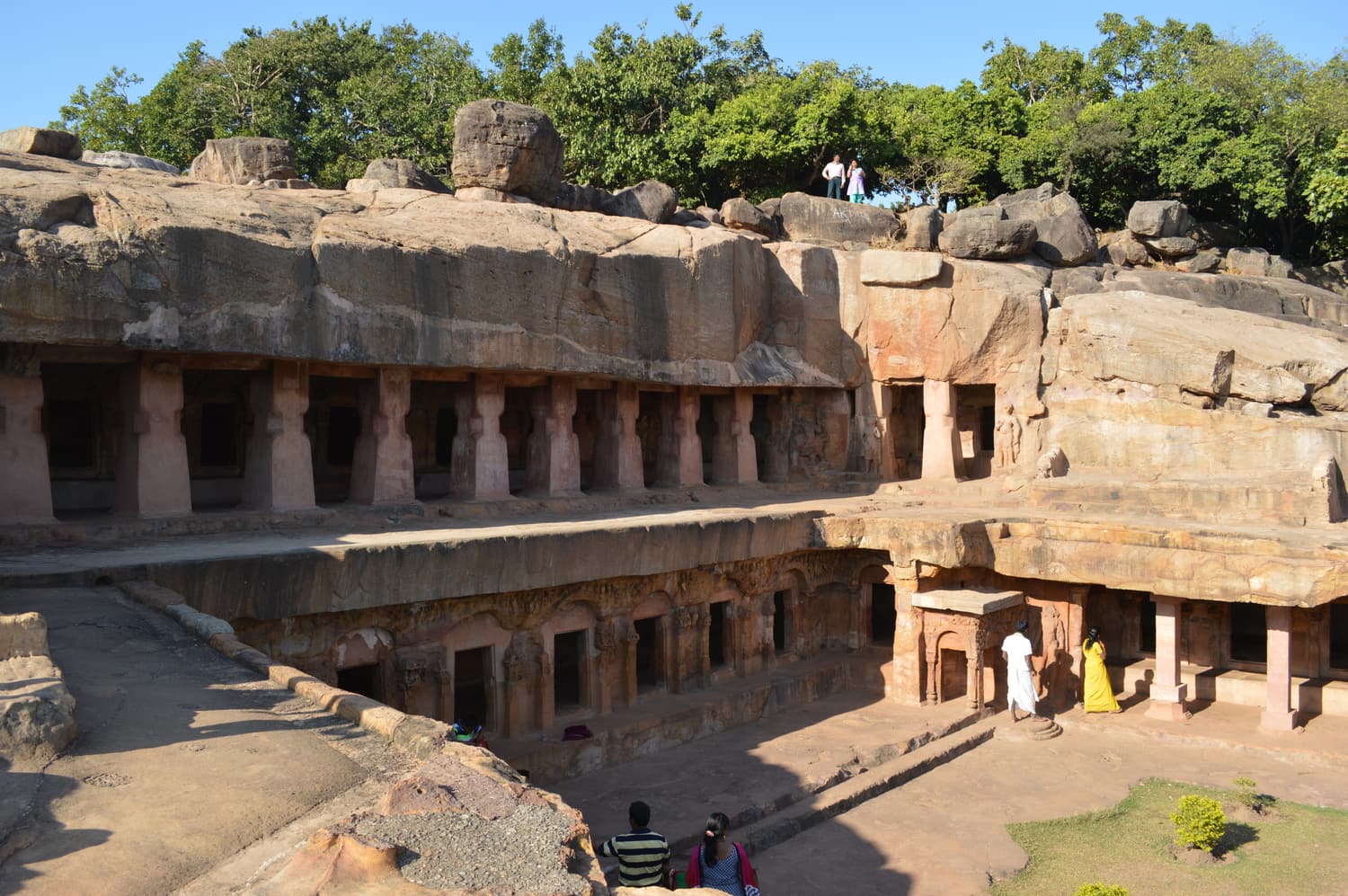
Udayagiri & Khandagiri Caves
Jain monasteries cut into the rock
Two sandstone hills on the western edge of the city, honeycombed with rock-cut cells carved for Jain monks more than 2,000 years ago. The two-storey Rani Gumpha and King Kharavela’s Hathigumpha inscription are the highlights.
 Around Bhubaneswar
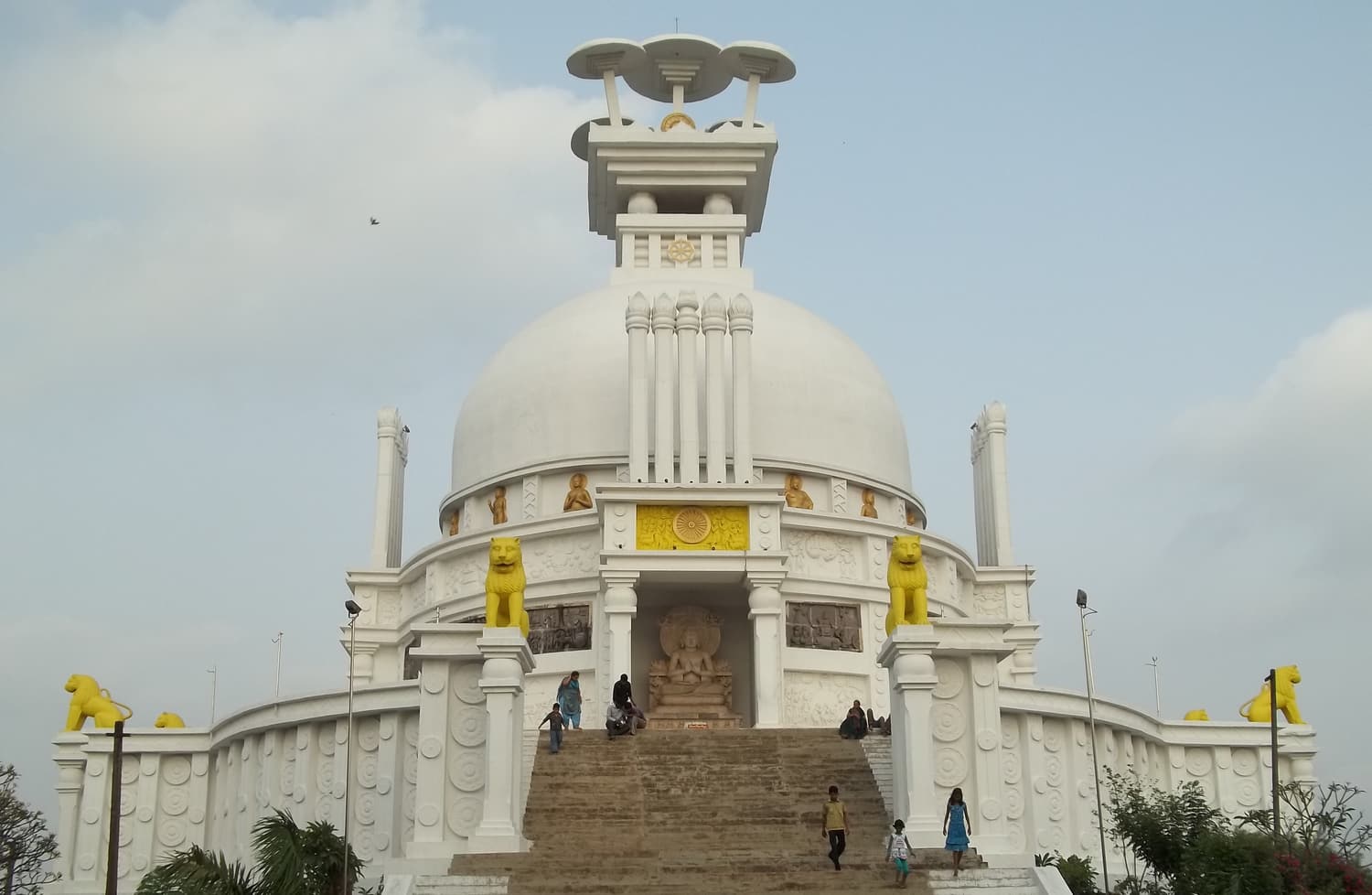
Dhauli & the Shanti Stupa
Where Ashoka turned to peace
A hill above the Daya river, traditionally identified with the aftermath of the Kalinga War of around 261 BCE. Emperor Ashoka’s rock edicts are carved here beneath a sculpted elephant, and a white Peace Pagoda built in the 1970s crowns the top.
See all sixteen, with directions and tours, in our things to see guide.
Sample itineraries
- Day 1 — Old Town: Bindu Sagar at dawn, the Lingaraj viewing platform, Parasurameswara, Mukteswar, Rajarani and Brahmeswara; afternoon at the State Museum; evening shopping at Ekamra Haat.
- Day 2 — Caves and Dhauli: Udayagiri and Khandagiri in the cool morning, Nandankanan or a rest at midday, Dhauli for sunset.
- Day 3 — Konark and Puri: Pipili on the way, the Sun Temple before the heat, the Marine Drive to Puri and the beach at sunset.
- Day 4 — Puri and around: the Jagannath Temple (or its surroundings for non-Hindus), Raghurajpur’s painters, or a boat on Chilika from Satapada.
What it costs
Odisha is one of India’s better-value regions. Typical costs:
| Item | Typical price |
|---|---|
| Old Town temples (Mukteswar, Parasurameswara, Lingaraj) | Free (donations welcome) |
| Rajarani Temple, Udayagiri–Khandagiri (ASI) | About ₹25 Indians / ₹300 foreigners |
| Konark Sun Temple (ASI) | About ₹40 Indians / ₹600 foreigners |
| Odia thali in a local restaurant | Inexpensive — a few hundred rupees at most |
| Auto-rickshaw across the city | Agree the fare; app cabs show it upfront |
| Private guided day trip to Konark | From about US$85–135 via GetYourGuide |
ASI rates are periodically revised and are slightly lower when bought online; SAARC and BIMSTEC nationals pay the Indian rate.
What to eat
Odia food is subtle, rice-based and underrated. Look for dalma (lentils cooked with vegetables), santula (lightly spiced vegetables), machha besara (fish in mustard paste) and chingudi (prawns) near the coast. In summer, locals swear by pakhala bhata, fermented rice in water served with fried fish or vegetables. Cuttack-style dahi bara aloo dum is the city’s favourite street snack.
Odisha is fiercely proud of its sweets: chhena poda (a baked, caramelised cheese cake), rasagola (Odisha’s version holds a GI tag) and Puri’s flaky khaja. Temples such as Ananta Vasudeva and Jagannath cook mahaprasad in earthen pots.
Where to stay
Most visitors stay in Bhubaneswar for the city and caves, then move to Puri for Konark and the sea:
- Bhubaneswar — resort hotels with gardens, central business hotels and good budget options, all close to the sights.
- Puri — beach hotels and resorts along the sea front and the Marine Drive, handy for Konark and Chilika.
We compare the best of each on our where to stay page.
Practical details
- Money: Indian rupee (₹). UPI mobile payments are everywhere; cards work in hotels and larger shops. ATMs are plentiful.
- Language: Odia is the state language; Hindi and English are widely understood in hotels, shops and among guides.
- Safety: Bhubaneswar is generally safe and relaxed. Use app cabs at night, watch for traffic, and be wary of touts around the big temples.
- What to pack: light cotton clothing that covers shoulders and knees, a scarf or shawl, sandals that slip off easily, sunscreen, a hat and an umbrella in the monsoon.
- Health: drink bottled or filtered water; carry mosquito repellent, especially after the rains.
- Connectivity: 4G and 5G coverage is good in the city and along the Golden Triangle.
Common mistakes
- Sightseeing at midday in April or May, when temperatures can pass 40 °C.
- Seeing only Lingaraj. The smaller, older temples are where the finest carving is.
- Trying Konark, Puri and Chilika in one day. Split them.
- Not carrying small notes and coins for shoe-minders and donations.
- Planning a trip around Rath Yatra without booking months ahead.